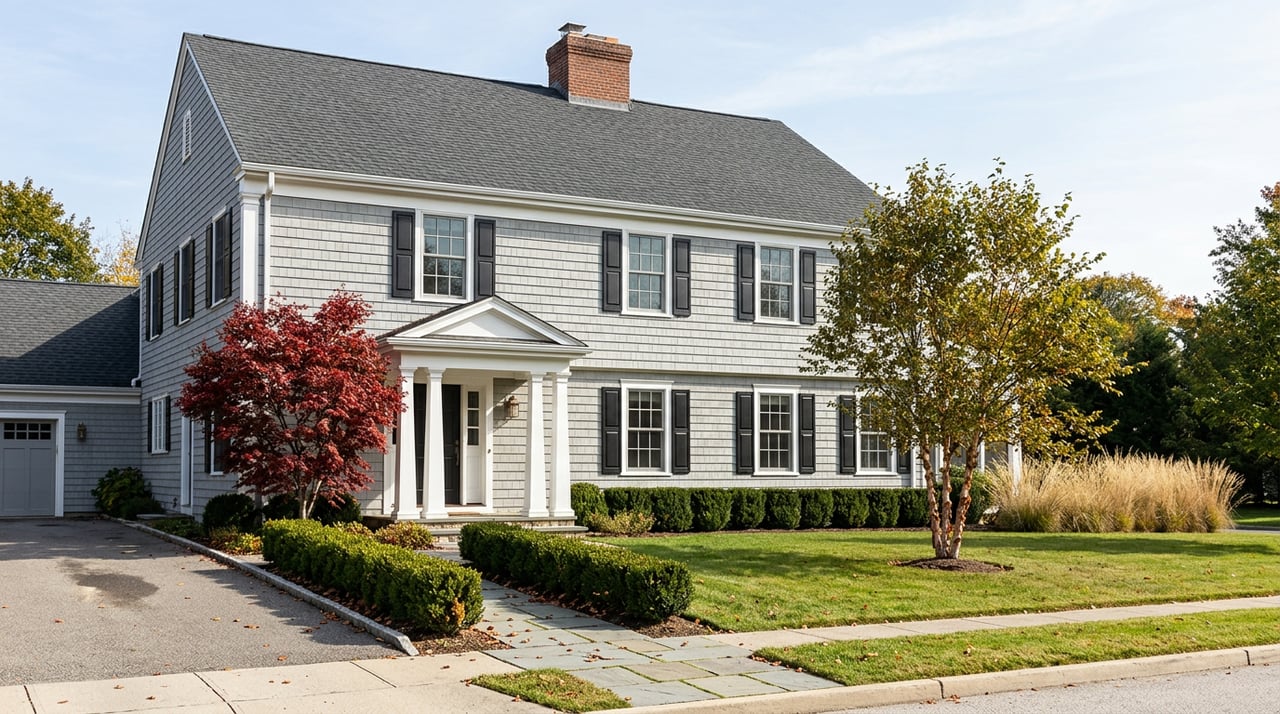
Lately, I’ve been calling it the season of Goldilocks.
I’ve been spending a lot of time out looking at homes with buyers, and I keep hearing different versions of the same thing.
This house is too big.
That one is too small.
This one needs too much work.
That one doesn’t have enough storage.
The yard is too big. The yard is too small. The layout doesn’t work. The bedrooms are on the wrong floor.
Nothing seems to be just right.
If you’re selling a home and hearing feedback like this, it can be frustrating. You may start wondering: What’s wrong with my house?
Sometimes the answer is actually: Nothing.
But that doesn’t mean sellers should ignore what buyers are saying, either.
The challenge is figuring out the difference between a house that simply hasn’t found its buyer yet and a house where the market is telling us something needs to change.
Not Every House Is Right for Every Buyer
This is one of the most important things to remember when your home is on the market.
Buyers aren't evaluating a house in a vacuum. They're trying to imagine their own lives there.
One buyer may walk into a large home and love all of the extra space. Another may immediately start thinking about the maintenance and decide it's too much house.
One buyer may love having a big yard. Another may see weekends spent mowing, raking and maintaining it.
A first-floor primary bedroom may be at the top of one buyer's wish list and completely unimportant to someone else.
The exact same feature can be a positive for one buyer and a negative for another.
That's why one piece of feedback after a showing shouldn't necessarily cause a seller to change course.
Sometimes the house simply wasn't right for that particular buyer.
Pay Attention to Patterns, Not Just Opinions
This is where buyer feedback becomes really valuable.
There's a big difference between one buyer saying a room feels small and multiple buyers saying the same thing.
If one person doesn't like your kitchen cabinets, that's an opinion.
If buyer after buyer comments that the home feels dark, the rooms feel crowded or the condition doesn't match the price, that's something worth paying attention to.
I like to look for patterns.
What are buyers consistently telling us?
Are we hearing the same objection over and over again?
Are buyers spending time in the house but not making offers?
Are they choosing competing homes instead? And if they are, what do those homes offer that this one doesn't?
The goal isn't to react to every comment. It's to figure out whether the market is giving us useful information.
Change What You Can Control
There are plenty of things about a home that a seller simply can't change.
You can't change the location.
You can't make the lot significantly larger.
You can't easily add hundreds of square feet.
You can't move the house farther away from a busy road or closer to the center of town.
And trying to make a home appeal to absolutely everyone usually isn't realistic.
But you can make sure the things you can control aren't the reason someone walks away.
If buyers think a room feels too small, perhaps there's too much furniture in it.
If the house feels dark, could different lighting, window treatments or even paint make a difference?
If buyers aren't sure how to use a particular room, could staging help give the space a clearer purpose?
Are small repairs or deferred maintenance distracting buyers from everything that's good about the house?
Could the photography, marketing or presentation do a better job of showing what makes the property special?
Those are all things we can evaluate and, in many cases, change.
And Yes, Sometimes It's the Price
Price is also part of the conversation.
That doesn't mean every home that doesn't sell immediately is overpriced.
But buyers compare homes. They're looking at what else is available in the same price range, what has recently sold and what they can get for their money.
A buyer may be perfectly willing to accept an older kitchen, smaller bedrooms or a less-than-perfect layout at one price and decide those same compromises aren't worth it at another.
That's why price and condition can't really be evaluated separately.
Sometimes the house doesn't need to change at all. The price simply needs to better reflect what buyers are seeing when they walk through the door.
Know What You Can't Control
This part is just as important.
If buyers consistently need four bedrooms and your home has three, that's not something staging is going to solve.
If someone wants a half-acre yard and your property sits on a smaller lot, no amount of landscaping is going to make the house right for that buyer.
And that's okay.
The goal isn't to remove every possible objection.
Every house has tradeoffs.
The goal is to present and position the home so that the buyers who are a good fit can recognize its value.
Sometimes the Strategy Really Is Patience
This can be the hardest recommendation for a seller to hear, especially after the house has been on the market for a while.
But sometimes you've done everything you're supposed to do.
The house is well prepared.
It shows beautifully.
The marketing is strong.
The price makes sense based on the market.
And the feedback isn't pointing to one consistent problem.
One buyer thinks it's too big. Another thinks it's too small. Someone wants more yard. Someone else doesn't want to maintain that much yard.
That's different from the market repeatedly telling us the same thing.
In that situation, sometimes the strategy really is patience.
We keep watching the market. We keep looking at the competition. We keep paying attention to buyer feedback. And if something changes, we adjust.
But we don't necessarily change something just for the sake of changing it.
You Don't Need Every Buyer
Selling a home can feel very personal. After all, this is a place where you've lived your life, and now strangers are walking through it and offering opinions about everything from your floor plan to your kitchen.
But you don't need every buyer to love your house.
You don't even need most buyers to love it.
You need the right buyer to see how the home could work for them.
So if it feels like we're in the season of Goldilocks and every buyer is looking for something slightly different, the answer isn't always to panic or immediately make a major change.
Listen to the feedback.
Look for patterns.
Change what you can control.
Be realistic about what you can't.
And sometimes, give the market a little time.
Because eventually, the goal is to find the buyer who walks in and thinks:
This one is just right.
If you're thinking about selling a home in Needham or the surrounding communities and wondering what today's buyers might notice, I'm always happy to take a look and help you figure out what is worth changing, what isn't, and how I would position your home for the market.