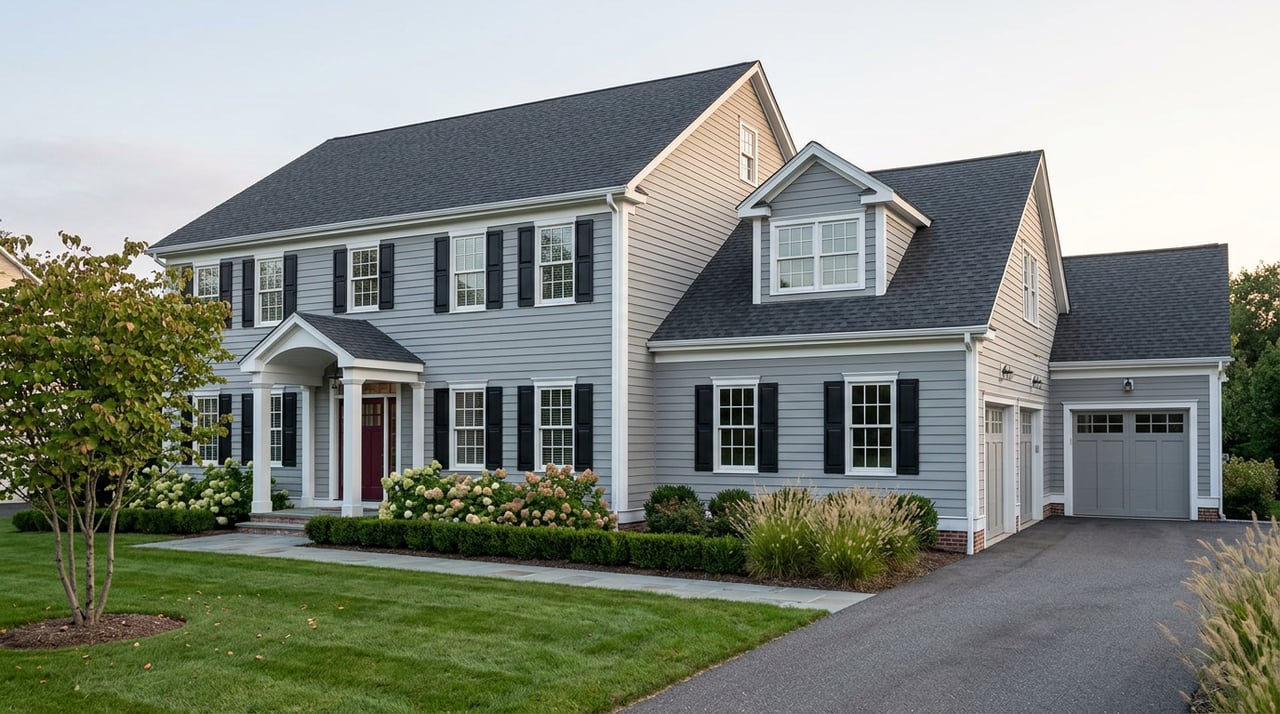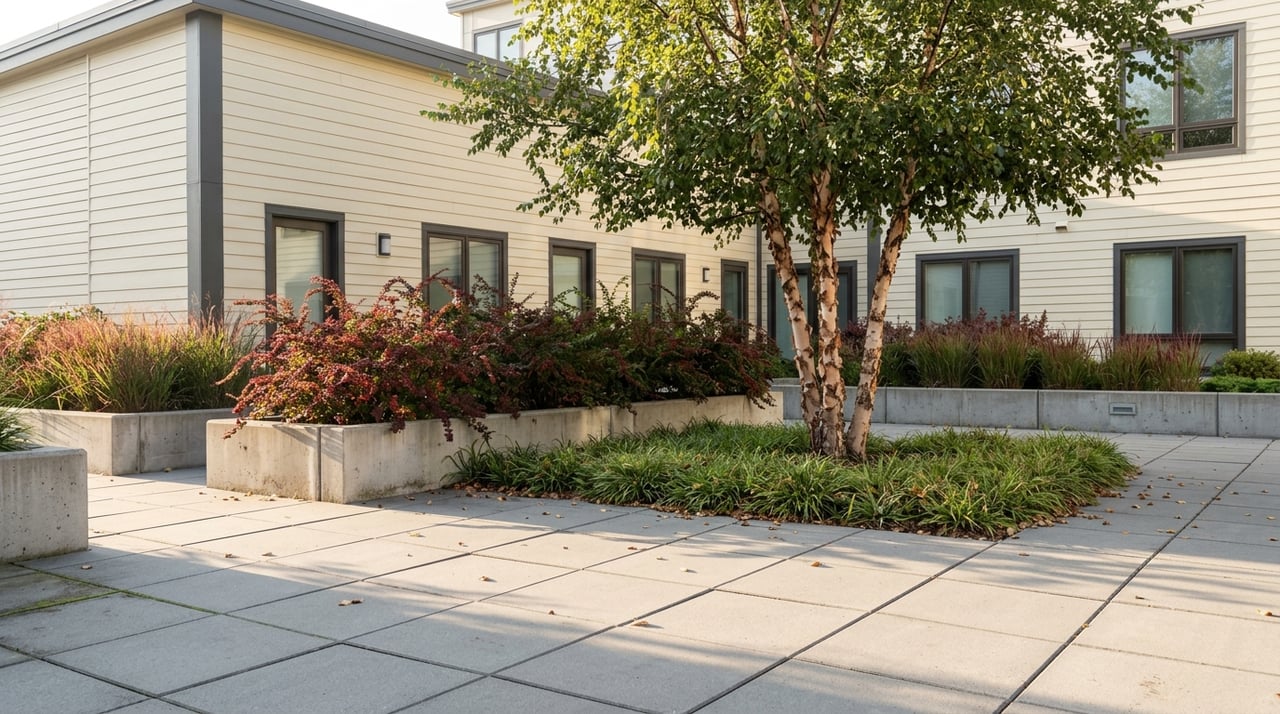
Drive along Highland Avenue in Needham Heights this summer and you will pass more than 600 feet of Jersey barriers and construction fencing wrapped around a long-vacant assisted living campus. Months of asbestos abatement and pest control gave way to demolition earlier this year, and crews broke ground in May on a three-story, 189-unit apartment building that is now rising behind the fence line. A construction site is usually just a construction site. This one is worth a second look, because roughly sixteen months earlier, Needham voters had already killed a housing plan of roughly this scale, and then some.
In October 2024, Town Meeting approved the Neighborhood Housing Plan by a hand vote of 118 to 90, authorizing zoning capacity for as many as 3,296 new housing units near the town's MBTA stations. Three months later, in a January 2025 special referendum, Needham voters repealed it. Nearly 11,819 ballots were cast, and 6,904 residents, about 58 percent, voted to overturn what Town Meeting had just approved.
That is the version of this story that made the Boston Globe and got debated on porches for a year. The version that actually determines what gets built near the Heights station is quieter, and it moved faster than almost anyone predicted.
The Vote Nobody Expected to Need a Sequel
Needham had been working toward MBTA Communities Act compliance since 2023, when the town's Housing Needham Advisory Group, known as HONE, began drafting options at the direction of the Select Board and Planning Board. By 2024, HONE had narrowed it to two choices: a Base Compliance Plan that made minimal changes to existing zoning, and a more ambitious Neighborhood Housing Plan layered on top of it. Town Meeting passed the base plan first, then voted to go further and adopt the expansive version.
Opposition organized quickly. A group called Needham Residents for Thoughtful Zoning gathered roughly 4,000 signatures to force the January referendum, arguing the plan would strain schools, worsen traffic, and change the town's character faster than residents had agreed to. Select Board Vice Chair Heidi Frail had made the opposite case at Town Meeting, pointing to the town's aging population:
"In just six years, almost a quarter, 25 percent, of Needham residents will be seniors. Think of a quarter of Needham's population aging in their single-family homes. This may prevent our seniors from living active and social lives, and for sure it will lock up our housing inventory."
Finance Committee Vice Chair John Connelly made the case for caution, telling Town Meeting that schools were already full and that "we have more than enough on our hands in dealing with the many challenges that the passage of the Base Compliance Plan will bring to us." Both were describing the same town from opposite ends of the same worry.
The referendum sided with Connelly's caution, at least on paper. But Needham still had a legal deadline to meet. The Select Board voted in January 2025 to submit an interim compliance action plan built around the smaller Base Compliance Plan, and Annual Town Meeting formally adopted it in May 2025.
What the Smaller Plan Actually Allows
The Base Compliance Plan created a roughly 100-acre overlay district along Needham's commercial spine, the same commuter-rail corridor the rejected plan had also targeted, just with a lower ceiling. The district already held 775 built units against a prior zoning capacity of 1,019. The Base Compliance Plan raised that capacity to about 1,870 units, comfortably above the state's required minimum of 1,784, while requiring 12.5 percent of units in any building of six or more to be deed-restricted affordable housing.
An analysis cited by the Boston Globe around the time of the referendum estimated the base plan would generate roughly 400 new units over the next several decades. That is the expectation this plan was built for: slow, incremental, easy to underestimate.
Plan | Town Meeting Action | Zoned Unit Capacity | Status |
|---|---|---|---|
Neighborhood Housing Plan | Approved 118-90 (Oct. 2024); repealed by referendum 6,904-4,914 (Jan. 2025) | ~3,296 units | Dead |
Base Compliance Plan | Adopted at Annual Town Meeting (May 2025) | ~1,784 required, ~1,870 zoned | In effect |
Within about a year of that adoption, the first project under the smaller plan is already 189 units by itself, nearly half the size of everything critics feared under the plan voters killed, and it went from zoning to groundbreaking faster than the town's own long-range estimate anticipated.
The Crane at Needham Heights
The 100 West Street project sits on a 4.3-acre parcel directly across from the Needham Heights Commuter Rail station, a former Carter assisted living campus that Ohio-based REIT Welltower had bought in 2002 for $14 million. Greystar acquired the site for $40 million and lined up a $69.5 million construction loan alongside partner Haseko North America, a subsidiary of Japan's largest condominium builder making its first move into the Northeast. Because the project was permitted under MBTA Communities zoning, it moved through Needham's Planning Board via site plan review rather than the discretionary special permit process that would have applied before the rezoning.
The plan calls for a three-story building with a mix of studio, one-, two-, and three-bedroom units, 24 of the 189 units income-restricted for households earning up to 80 percent of area median income, built to Passive House energy standards. Site work and demolition ran through early 2026, vertical construction began that spring, and delivery is targeted for fall 2027. Future residents will find a Trader Joe's and CVS directly across Highland Avenue, with Rosemary Lake and the Needham Free Public Library both within a mile.
The Quieter Second Project
About a mile away, in the same Avery Square district, a much smaller project has moved through town review with almost no friction. Local developer Matt Borrelli is behind a proposal to replace a 1940s two-family home at 242 Hillside Ave, purchased by Needham Enterprises in August 2024 for $1.825 million, with a three-story, 14-unit building. The Design Review Board reviewed it in November 2025 and had little to critique. Chair Mark Gluesing called it "a nice, scaled building" that "fits into a neighborhood of residential structures," while architect Scott Melching described the project's purpose more broadly: "It provides a different kind of living, a different housing typology. This will bring more types of folks to our town, which is really a good thing."
The building itself is modest by design: roughly 12,000 square feet holding eight two-bedroom units between 800 and 920 square feet and six one-bedroom units between 540 and 670 square feet, two of them designated affordable. It needed only a curb-cut approval to clear the Planning Board. Needham Enterprises is separately building a six-unit project at 339 Chestnut Street under the town's existing zoning, unrelated to the MBTA law, which suggests smaller local builders are finding openings in Needham's housing market with or without the new overlay district.
What This Actually Means If You're Watching From Outside
If you are comparing Needham to Newton or Wellesley while deciding where to buy, the useful signal here is not the vote count. It is the gap between the two. Needham's most publicized housing fight produced nothing. Its least publicized zoning change is already putting up steel. If you want to gauge how a town's housing supply is actually changing, the Planning Board's site plan approvals and the Design Review Board's meeting notes tell you more than a Town Meeting warrant article ever will.
For buyers worried about density spreading into single-family neighborhoods, the geography is worth noting on its own. Both projects sit along the commercial spine near the commuter rail line, not scattered through residential streets. For anyone thinking about downsizing within Needham rather than leaving town, a 14-unit building with one- and two-bedroom units in the 540 to 920 square foot range is closer to the kind of inventory Frail argued the town was missing than anything currently on the resale market. And for renters or relocating buyers weighing Needham against nearby towns, roughly 200 new units concentrated near one commuter rail stop, with the larger building on track for fall 2027 and the smaller one still finishing town approvals, is a real, dated data point rather than a hypothetical one.
None of this changes the math for someone competing for a single-family home in Needham today. These are rental apartments on a commercial corridor, not new lots. What it does change is the answer to a question worth asking before you commit to any MetroWest town: is the housing conversation here mostly political noise, or is something actually being permitted and financed? In Needham's case, right now, it is both, and they are not happening in the same place.
Quick Answers
Is Needham still building housing under the plan voters rejected? No. The 3,296-unit Neighborhood Housing Plan was repealed in January 2025. What's under construction now, including the 189-unit building at 100 West Street, is authorized under the smaller Base Compliance Plan Town Meeting adopted in May 2025, which sets zoned capacity closer to 1,870 units.
Where are the new units located? Both active projects, at 100 West Street and 242 Hillside Ave, sit in the Avery Square district along Needham's commuter rail commercial corridor, about a mile apart, not within single-family residential neighborhoods.
When will the new apartments be available? Greystar and Haseko's 189-unit project at 100 West Street is targeting delivery in fall 2027. The 14-unit building at 242 Hillside Ave was still completing Planning Board review as of December 2025.
Does this affect single-family home prices in Needham? Not directly. These are rental apartments on commercially zoned land, not new single-family inventory. Their relevance is greater for renters, downsizers considering smaller units within town, and anyone assessing how the area near Needham Heights station will look over the next two years.
If you are trying to figure out what any of this means for a specific street or a specific decision, that is the kind of question worth a real conversation rather than another zoning map. Alison Borrelli works Needham and the surrounding towns full time and can walk you through what is actually zoned, what is actually financed, and what is still just a warrant article. Start with a Free Home Value Report and find out where your Needham plans actually stand.