The moment usually arrives about eight weeks into the process. You have closed on the house, hired the architect, sketched the addition or the full rebuild, and you are sitting in the third design meeting when someone mentions, almost in passing, a "Tree Bank fee." You ask what that means. The answer, as McDonald Tree explains, adds five figures to a budget you thought was settled.
Tree protection rules are one of several approval considerations that can affect a renovation's timing or budget after the purchase and sale agreement is signed. If you are buying an older Wellesley home with plans to expand it, replace it, or rebuild it, you are not the exception in this market. Planning for these requirements is part of evaluating a Wellesley home for a major renovation.
The Math That Explains Why This Matters to Almost Everyone
Here is the number that reframes the whole conversation. According to the town's own housing plan, more than 1,200 single-family homes were built in Wellesley between 2003 and 2025. Over that same span, the net increase in the town's single-family housing stock was just 95 homes.
Do the subtraction and you get a town that has spent more than two decades replacing itself almost one-for-one. Wellesley is close to built out on a lot-by-lot basis, so "new construction" in this market rarely means a house going up on raw land. It almost always means an older house coming down first. That is why the three bylaws below are not a corner case for eccentric old-house buyers. They are the operating system for a large share of what actually trades hands and gets rebuilt in this town every year.
The Demolition Delay: Article 46C
Wellesley's Historic Preservation Demolition Review Bylaw took effect in August 2017, after the Attorney General's office approved it and the Town Clerk posted it. The mechanics are straightforward but easy to miss if you are moving fast toward a closing.
Any dwelling that has been used as a residence within the last three years and was built on or before December 31, 1949 has to go through an eligibility check before a demolition permit can be issued. If the Historical Commission finds the home is not eligible, you are cleared to move forward. If it is eligible, the Commission holds a public hearing, within 45 days of the application, to decide whether the house should be "preferably preserved." A finding of "not preferably preserved" clears the way. A finding that it should be preserved triggers a delay of up to 12 months before any demolition permit can be issued.
The bylaw's own early track record shows how often that second outcome actually happens. In the first several months after the rule took effect, Wellesley's Planning Director reported 37 Eligibility Notice applications. Of those, 22 homes were found eligible for review. Of that group, 7 were determined to be preferably preserved, meaning a 12-month clock started on those specific properties, and 5 of those 7 owners applied for a waiver to try to shorten or remove the wait.
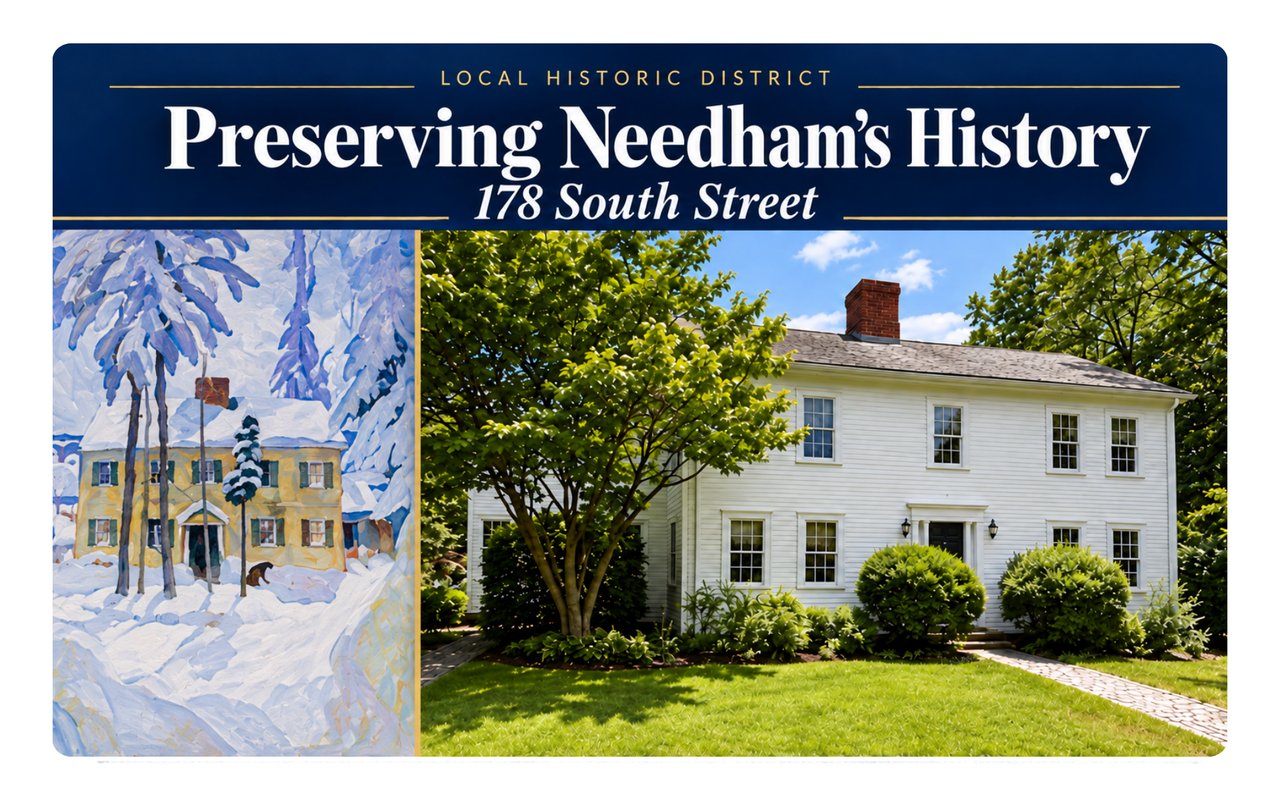
That is a meaningful share of teardown candidates landing in the delayed bucket, and it is worth knowing before you write an offer, not after. If your target property was built before 1950 and has been lived in recently, the honest answer to "when can we break ground" is "we don't know yet" until the eligibility check runs its course. If the house sits inside one of Wellesley's Local Historic Districts, the stakes are higher still. Wellesley's Local Historic District review process says demolition inside those districts can be blocked outright, and new construction has to match the surrounding neighborhood in scale and form rather than simply clearing a 12-month delay.
The Planning Board Sign-Off: Large House Review
A second layer applies once you know the house is coming down or getting significantly bigger. Section XVID of the Zoning Bylaw, known as Large House Review, measures a proposed home by its Total Living Area plus Garage Space, or TLAG. If that combined figure exceeds the threshold set for the zoning district the property sits in, the plans need Planning Board approval before the Building Department can issue a permit.
This is a separate approval from the demolition review process, and it applies regardless of when the existing house was built. A brand-new design on a 1970s lot can trigger Large House Review just as easily as a rebuild on a pre-1950 lot triggers demolition review. The two processes can run at the same time on the same property, which is part of why timelines on Wellesley teardowns tend to run longer than buyers expect walking in.
Section XVIE: The Tree Bylaw and Potential Fees
Wellesley's tree protection bylaw, passed at Town Meeting in March 2011 and effective that July, is one of the stricter versions of this kind of rule in eastern Massachusetts. It only applies when demolition or significant construction activity takes a Protected Tree down as part of the project. A dead pine removed on a quiet Tuesday with no permit application in motion is not covered. A mature tree cleared to make room for a foundation almost always is.
When a Protected Tree does come down, the developer files a Tree Protection and Mitigation Plan with the Building Department, and the town gives two paths: replant on site at a set ratio, or pay into the town's Tree Bank. The Tree Bank fee scales by caliper inch in tiers, and the math adds up fast. A single 76-inch copper beech, the kind of specimen tree that actually exists on some Wellesley lots, prices out to roughly $17,150 in mitigation fees alone if the owner chooses to pay rather than replant. Stack a few mature trees on one lot, which is common on the town's larger older properties, and a demolition project with three 24-inch maples and one 36-inch oak can land north of $20,000 in Tree Bank fees before a shovel touches the ground.
Those dollars fund the town's public tree program, including replacements for storm-damaged street trees and the maintenance rotation on Wellesley's thousands of public shade trees. Wellesley has held its Tree City USA designation for more than 30 consecutive years, longer than any other community in New England, and the Tree Bank is a meaningful part of why. That is a genuine civic asset. It is also a cost that rarely appears on a listing sheet, a comparable sale, or an initial renovation estimate, so buyers may want to include potential mitigation fees in early project planning.
If the Lot Touches Water, Add a Fourth Layer
Wellesley properties near the Charles River or any of the town's perennial streams face an additional buffer rule under the Massachusetts Wetlands Protection Act and the town's own Wetlands Protection Bylaw. The Charles River carries a 200-foot Riverfront Area along its entire run through Wellesley. Rosemary Brook, Fuller Brook, Boulder Brook, and Waban Brook each carry their own 200-foot Riverfront Areas as perennial streams. Smaller features, including vernal pools and mapped wetlands in older subdivisions, carry a 100-foot buffer. Altering land, water, or vegetation inside those zones requires a permit from the town's Wetlands Protection Committee, and the buffer often reaches farther onto a property than owners expect.
What This Actually Means for Your Timeline
None of this means a Wellesley renovation or rebuild is a bad idea. It means the calendar and the budget you build with your lender and your architect should account for these approvals from the start, not after the fact. A pre-1950 home near a mapped wetland with mature trees on the lot can realistically stack all four processes: demolition eligibility review, a possible 12-month delay, Large House Review if the new design exceeds TLAG thresholds, and potential Tree Bank fees, as noted above.
Before you write an offer on a Wellesley property you plan to significantly change, it is worth confirming the build year through pre-2009 building permit records at Town Hall or deed records at the Norfolk County Registry of Deeds, and worth asking early whether the lot sits inside a mapped wetland buffer or a Local Historic District. Those answers shape the real timeline far more than the asking price does.
Quick Questions
How do I find out if my target house was built before 1950? Wellesley's Building Department keeps pre-2009 building permit records on a public-access computer at the front counter of Town Hall, and Norfolk County deed records can confirm ownership history against those permits.
Can the 12-month demolition delay be shortened? Owners can apply for a waiver. Historical data from the bylaw's early years shows most owners facing the delay did apply, though outcomes vary case by case.
Does the tree bylaw apply to a simple addition, not a full teardown? Yes, if a Protected Tree comes down as part of the construction activity, the Tree Protection and Mitigation Plan requirement applies regardless of whether the project is a full rebuild or a smaller addition.
Is a Local Historic District the same as the demolition review bylaw? No. The demolition review bylaw applies townwide to eligible older homes and caps the delay at 12 months. As noted above, a Local Historic District can block demolition outright and requires new construction to match the surrounding neighborhood's scale and form.
If you are weighing an older Wellesley property against the work it might take to renovate or rebuild it, the numbers above are worth running before the offer, not after the closing. Alison Borrelli has spent her career inside these exact Wellesley transactions and can walk you through what a specific lot, house, and street are likely to trigger before you commit to a timeline you did not choose.
This article is general information, not legal, tax or financial advice. Consult a qualified professional about your situation.